Delhi - Jaipur
Duration
1 DayType
AdventureGroup Size:
10Languages
EnglishJaipur is one of the those iconic places that ends up on almost every traveler’s list, and it completely deserves the hype. There’s something so addictive about the city—it’s this beautiful, chaotic mix of massive hilltop forts, stunning palaces, and streets packed with color, incredible food, and non-stop energy. It honestly feels less like a typical tourist stop and more like stepping straight into a living royal history. It usually happens around late afternoon, just as the blazing Rajasthani sun begins to soften into a dusty, golden haze. You’ll be standing on a sandstone terrace, the faint sound of traffic and street vendors humming down below, while a flock of green parakeets cuts sharply across a sky that seems impossibly wide.Known worldwide as the Pink City, Jaipur is a place where India’s royal past refuses to settle quietly into history books. Instead, it lives right out in the open. The legendary Maharaja Sawai Jai Singh II founded this city in 1727, moving his capital down from the hills of Amer. He didn’t just build a town; he designed an architectural masterpiece based on classical principles of geometry and space. To welcome the Prince of Wales in 1876, the entire city was painted a warm terracotta pink the traditional color of hospitality and the law stuck. Today, that uniform hue gives the old walled city a continuous, dreamlike rhythm.If you truly want to understand why travelers lose their hearts to this corner of Rajasthan, you have to look past the modern concrete edges and explore the historic landmarks that give Jaipur its timeless soul.
The Masterpieces of Jaipur
Amer Fort:
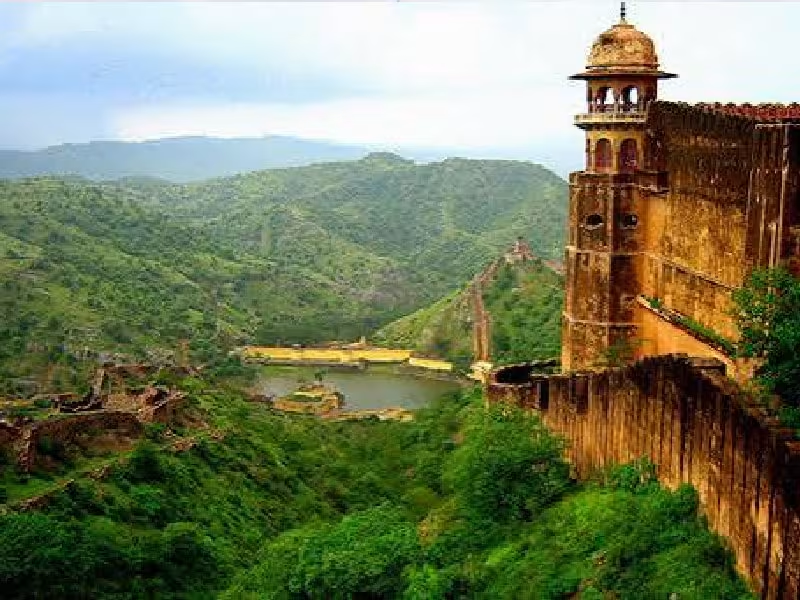
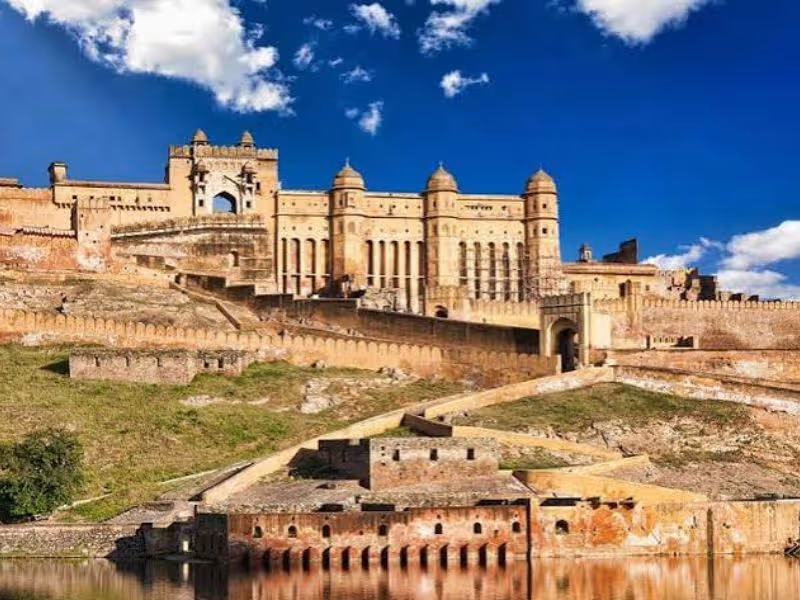
The Hilltop KingdomYour journey into Jaipur’s history logically begins about 11 kilometers outside the modern city center, where the rugged peaks of the Aravalli range cradle the colossal Amer Fort. For centuries before Jaipur existed, this was the epicenter of Rajput power. Approaching it from the base of the hill, the fort looks deeply intimidating a massive, sprawling maze of thick stone ramparts, heavy gates, and defensive watchtowers that look like they could withstand any army.But the moment you pass through the sun bleached archway of Sun Gate (Suraj Pol) and enter the main courtyard, that military harshness melts away into pure luxury. The Rajputs were masters at balancing wartime defense with delicate art.Walking past the grand Ganesh Pol, a gateway decorated with beautiful, hand-painted frescoes that have survived hundreds of years of mountain weather, you find yourself in the inner royal chambers.Here sits the legendary Sheesh Mahal (Palace of Mirrors). The entire pavilion is inlaid with thousands of tiny, concave mirror shards imported from Belgium. If you close the heavy wooden doors to block out the daylight and strike a single match, the ceiling instantly transforms into a glittering galaxy of stars. The engineering here was incredibly thoughtful; the concave shape of the glass caught the minimal light of candles to warm the stone rooms during chilly desert winters without producing blinding smoke.
Jaigarh Fort:
The Fortress of VictoryIf Amer Fort is the elegant, artistic heart of the old kingdom, Jaigarh Fort is its raw muscle. Sitting high on the peak directly above Amer, the two structures are physically linked by a network of heavy stone walls and secret underground tunnels designed for quick escapes during a siege.Built by Sawai Jai Singh II in 1726, Jaigarh was the military backbone of the empire. Because it sits at such a high elevation, it was never successfully breached by an invading army, earning it the title of the Fortress of Victory.The fort holds a massive, functional foundry where some of the finest military hardware in Asia was cast. Walking along its open sandstone paths, you eventually come face to face with the Jaivana Cannon. At the time of its manufacturing, it was the world’s largest operational cannon on wheels. The weapon is so massive that it required a team of four elephants just to turn it, and its single test-firing is said to have sent a ball flying nearly 35 kilometers across the plains.Beyond the weaponry, Jaigarh feels wonderfully wild and unpolished. Wandering through its open courtyards and looking down into its massive deep-water cisterns gives you a genuine appreciation for the rugged, practical survival skills of the Rajput rulers.
Nahargarh Fort:
Where the City Unfolds BelowCompleting the historic defensive triangle is Nahargarh Fort, perched on the sharp edge of the Aravalli ridges. Originally named Sudarshangarh, it became known as Nahargarh, which translates to the “Abode of Tigers.” Legend has it that the ghost of a prince named Nahar Singh Bhomia haunted the construction site, settling down only after a small temple was built in his honor within the walls.Architecturally, Nahargarh is famous for the Madhavendra Bhawan, a two-story palace built by Sawai Madho Singh. The interior layout is a fascinating look into royal domestic life: it features nine identical apartments for the king’s nine queens, all connected by a central hallway but cleverly isolated from one another so that the Maharaja could visit individual chambers without the others knowing.Today, Nahargarh has a wonderfully casual, relaxed energy. While history buffs come to study the architecture, locals and backpackers make the winding trek up the hillside for one simple reason: the sunset. Standing on the fort’s high terrace as day turns to night, you can watch the entire Pink City spread out beneath you like a massive grid of twinkling lights, offering a quiet escape from the frantic energy of the streets down below.
Jal Mahal: The Submerged Illusion
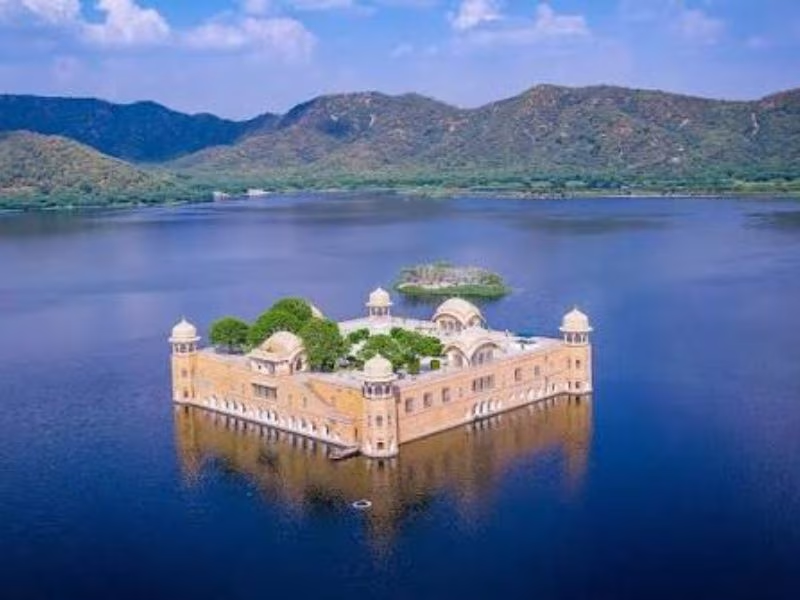
Driving down the winding mountain passes from the forts back toward the city center, you’ll encounter one of the most serene sights in India: the Jal Mahal (Water Palace). Resting quietly in the center of the calm waters of Man Sagar Lake, this yellow sandstone palace looks like a brilliant architectural mirage.
The Jal Mahal is a masterclass in ancient engineering. While it looks like a single-story pavilion from the shoreline, it actually has five stories. The lower four floors are completely submerged beneath the lake’s surface when the water is high.The walls were built using a specialized, water-resistant lime mortar that has successfully prevented leaks for centuries. It wasn’t built as a residential home, but rather as a royal pleasure pavilion where the King and his inner circle could relax during duck-hunting excursions. While you can no longer take a wooden boat out to step onto its terraces, standing on the lakeside promenade as the water reflects the details of the stone pillars is an unforgettable experience.
Hawa Mahal:
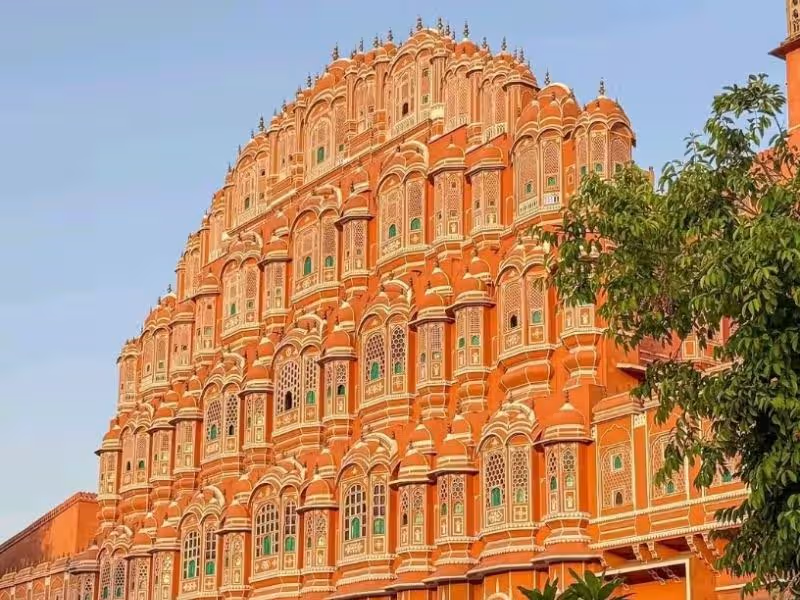
The Symphony of WindsAs you pass through the old city gates into the historic core, you will run right into the global symbol of Jaipur: the Hawa Mahal (Palace of Winds). Built in 1799 by Maharaja Sawai Pratap Singh, this five-story facade looks less like functional architecture and more like an elaborate, vertical pink honeycomb rising straight up from the sidewalk.The building is remarkably thin just a few feet deep in certain sections and its facade features 953 small windows (Jharokhas) decorated with delicate stone latticework. The design served a brilliant dual purpose:Royal Anonymity: It allowed the women of the royal court to look down at the lively street festivals, markets, and processions without breaking the strict rules of purdah (seclusion), which prevented them from being seen by the public.Natural Air Conditioning: The hundreds of tiny openings create a natural cooling system based on the Venturi effect. As warm desert air is forced through the small window openings, it drops in temperature, keeping the inner viewing rooms remarkably cool even during the peak of summer.
City Palace:
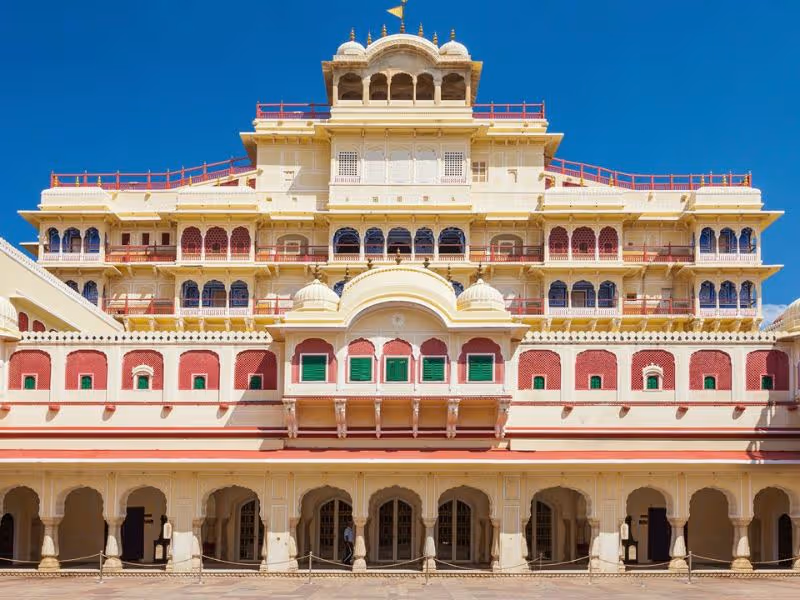
The Living Soul of JaipurJust a brief walk away from the Hawa Mahal lies the sprawling City Palace, a massive urban complex of grand courtyards, structured gardens, and historical pavilions. Founded by Sawai Jai Singh II, the palace has been continually expanded by successive rulers, creating a beautiful mix of Rajput tradition, Mughal elegance, and European design.What makes City Palace so captivating is that it isn’t a dead monument. A private wing of the palace, the Chandra Mahal, remains the official home of the titular royal family of Jaipur. Step inside the public courtyards, and you are surrounded by living history.In the center of the grand Diwan-i-Khas (Hall of Private Audience), you will see two enormous sterling silver urns. Certified by the Guinness Book of World Records as the largest silver vessels anywhere on Earth, they were crafted from 14,000 melted silver coins. Maharaja Madho Singh II had them built for his journey to England in 1902; as a devout Hindu, he refused to drink European tap water, using these massive jars to carry thousands of liters of holy water from the Ganges River across the ocean.Before leaving, spend some time in the Pritam Niwas Chowk. This inner courtyard features four small, breathtaking gateways, each dedicated to a different Hindu deity and a specific season of the year. The most famous is the Peacock Gate, decorated with spectacular glass mosaic work that captures the brilliant blues and greens of a peacock’s feathers during the monsoon season.Jantar Mantar: The Stone Time MachineDirectly outside the walls of the City Palace sits Jantar Mantar, an open-air collection of nineteen giant stone astronomical instruments. Built by Maharaja Sawai Jai Singh II between 1724 and 1738, this UNESCO World Heritage Site looks like a playground of abstract, futuristic art structures. In reality, it is one of the most accurate stone observatories ever constructed.
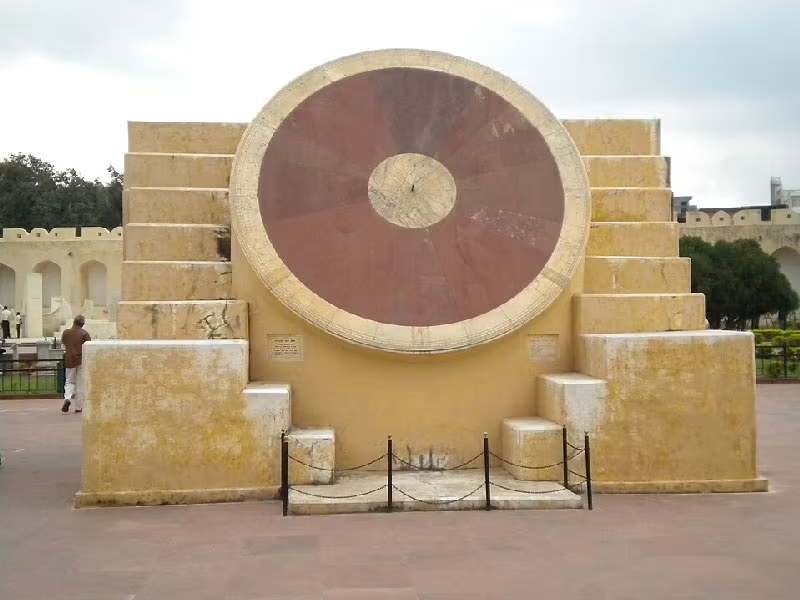
Sawai Jai Singh II was deeply dissatisfied with the small brass instruments of his era, finding that minor alignment slips led to massive errors when calculating calendar dates and star movements. His solution was simple: build them out of solid stone and marble on a giant scale to eliminate structural movement.The centerpiece of the collection is the Vrihat Samrat Yantra, a massive sundial that stands 27 meters tall. Its shadow moves at a steady, visible speed of four millimeters per minute across a curved marble scale. By tracking that movement, you can read the local time to an accuracy of within two seconds. Walking among these massive instruments, you realize that long before modern technology arrived, Jaipur was home to a profound, world-class scientific community.Patrika Gate: The Modern Vibrant EntrywayTo see how Jaipur continues its rich artistic traditions into the modern era, you have to head down toward the southern edges of the city to visit.
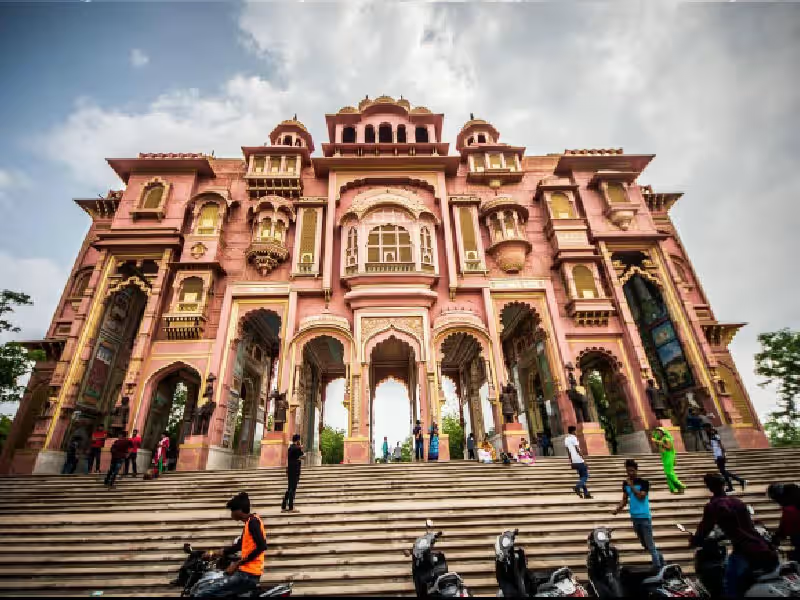
Patrika Gate. Serving as the grand entrance to the Jawahar Circle Garden, this relatively recent monument has quickly become one of the most photographed spots in the country.While the historic forts show off the defensive grit of Rajasthan, Patrika Gate is a pure, unadulterated celebration of color. The long, covered walkway is framed by a succession of nine grand archways. Every square inch of the walls, ceilings, and pillars is hand-painted with detailed murals by local artisans.As you walk through the gate, the murals tell the visual story of Rajasthan: illustrations of royal weddings, traditional folk dancers, portraits of past rulers, and depictions of the everyday artisans who make the state famous. It serves as a beautiful, vibrant reminder that the artistic identity of Jaipur didn’t end with the Maharajas it continues to thrive today.The Sensory Soul of the Pink CityYou cannot fully understand Jaipur through its stone monuments alone. The true character of the city is found in its sensory experiences the sounds, the smells, and the daily hustle of its historic markets.
As you explore the old city, give yourself permission to get lost in the historic, grid-like bazaars. In Johari Bazaar, you can watch gem cutters shape raw stones using methods passed down through generations. In Bapu Bazaar, the air smells of fresh leather and cotton textiles dyed with traditional vegetable blocks.When the heat gets intense, do what the locals do: pull up a stool at a street-side stall. Grab a piping-hot, crispy Pyaz Kachori (a flaky pastry stuffed with spiced onions) followed by a cold glass of thick, sweet curd lassi served in a disposable clay pot (kulhad). It is simple, authentic, and completely satisfying.Jaipur is a city that requires you to slow down and accept its chaotic rhythm. It is a place where majestic history and everyday survival sit comfortably side-by-side. Long after you return home, it is the vibrant colors, the warm hospitality, and the striking desert sun hitting the pink sandstone walls that will stay with you, drawing you back to Rajasthan time and time again.
Start your day with an early pick-up from your Delhi hotel, home stay, or airport. Board your comfortable, air-conditioned vehicle for the drive to Jaipur. Covering a distance of 250 kilometers, this journey takes about 5 hours. An early departure ensures that you have plenty of time to experience Jaipur’s top attractions without feeling rushed.
Enjoy a brief stop midway through your journey. This 15-minute break is a great chance to stretch your legs, grab a quick snack, and recharge before continuing your drive to Jaipur. It helps break up the journey and prepares you for a full day of sightseeing.
Arrive in Jaipur around 10:00 AM and head straight to Amber Fort, a magnificent hilltop fortress. This impressive fort, built in the 16th century, is renowned for its stunning Rajput architecture and panoramic views. Explore its grand gates, beautiful courtyards, and ornate palaces. For an unforgettable experience, opt for an elephant ride up to the fort’s entrance. Amber Fort, initially constructed by Raja Man Singh and expanded by his descendants, reflects the splendor of Rajputana architecture.
After exploring Amber Fort, enjoy a delicious lunch at a local restaurant. Savor the flavors of traditional Rajasthani cuisine and experience the region’s culinary heritage. This break allows you to relax and refuel before continuing your tour.
Continue your tour with a visit to Jal Mahal, the “Water Palace” situated in the middle of Man Sagar Lake. While you can’t enter the palace, the exterior view of this 18th-century architectural marvel is stunning. Next, visit Hawa Mahal, or the “Palace of Winds.” Built in 1799, this pink sandstone palace features 953 intricately designed windows, allowing royal women to observe street festivals and daily life without being seen. The palace’s unique facade is a symbol of Jaipur’s architectural brilliance.
Next on your itinerary is the City Palace, a grand complex blending Rajasthani and Mughal architectural styles. Constructed between 1729 and 1732 by Sawai Jai Singh II, the palace includes several sections added by later rulers. Explore the Mubarak Mahal, showcasing a collection of textiles and artifacts, and the Chandra Mahal, the private residence of the royal family. The City Palace offers a glimpse into the opulent lifestyle of Jaipur’s former rulers.
Your next stop is Jantar Mantar, an 18th-century astronomical observatory built by Maharaja Sawai Jai Singh II. This UNESCO World Heritage Site features a collection of large-scale astronomical instruments used to study celestial bodies. Jantar Mantar highlights India’s historical contributions to astronomy and provides insight into the scientific achievements of the time.
As your day in Jaipur concludes, begin your journey back to Delhi. Enjoy the comfort of your air-conditioned vehicle during the 5-hour drive. Reflect on the day’s experiences and the beauty of Jaipur’s landmarks.
Make one final stop midway through your return journey to stretch and refresh. This 15-minute break helps break up the drive and ensures you arrive in Delhi feeling comfortable.
Arrive back in Delhi by 8:30 PM. Your private vehicle will drop you off at your hotel, home stay, or airport. This concludes your one-day tour to Jaipur, leaving you with lasting memories of a day spent exploring the Pink City’s rich heritage and architectural splendor.
This one-day tour from Delhi to Jaipur is designed to give you a comprehensive experience of Jaipur’s key attractions. From historical forts and palaces to beautiful observatories, this tour provides a perfect blend of cultural, historical, and architectural experiences in just one day.